Key Takeaways
- Rapid Lifecycle: Pine beetles can kill a mature, healthy pine in as little as 30 days under the right conditions.
- The “Pitch Tube” Sign: Small, popcorn-like clumps of resin on the bark are the tree’s attempt to “push out” the invading beetles.
- Secondary Infection: Beetles often carry “Blue Stain Fungus,” which clogs the tree’s water-conducting tissues, accelerating death.
- Neighborhood Risk: Beetles release pheromones that signal other beetles to attack nearby trees, creating a “spot” of dead pines.
- Proactive Clearing: Removing stressed or overcrowded pines through land management is the most effective way to prevent a localized outbreak.
In the dense, pine-heavy corridors of Harris County, the towering Loblolly and Shortleaf pines are more than just landscape features; they are a vital part of the Texas ecosystem. However, these giants face a silent, microscopic predator that can level an entire stand of timber in a single season: the Pine Beetle. While droughts and storms are visible threats, the Pine Beetle works from the inside out, often remaining undetected until the tree is beyond saving.
For property owners in Houston, Cypress, and the surrounding wooded areas, understanding the “Pine Beetle Alert” status is critical. Because our region often experiences cycles of heavy rain followed by intense heat, our pines are frequently stressed, and a stressed pine is a beacon for infestation.
The Mechanics of an Attack
There are several species of bark beetles in Southeast Texas, but the Southern Pine Beetle (SPB) and the Ips Engraver Beetle are the most destructive. These insects don’t eat the wood; instead, they tunnel into the “cambium“, the thin, living layer between the bark and the wood. This layer is the tree’s circulatory system. When beetles bore through it, they create “galleries” (tunnels) that effectively girdle the tree, cutting off the flow of water and nutrients.
To make matters worse, these beetles often carry the spores of the “Blue Stain Fungus.” As the fungus grows, it clogs the tree’s xylem, preventing water from reaching the needles. This double-assault of mechanical tunnelling and fungal infection is why a pine can go from looking healthy to “rust-red” and dead in a matter of weeks.
How to Spot the Pine Beetle Problem Early
Early detection is the only way to prevent a single infested tree from becoming a multi-acre disaster. Homeowners should look for these three primary indicators:
1. Pitch Tubes
The tree’s first line of defense is its resin. When a beetle bores into the bark, the tree tries to “pitch” it out with a burst of sap. This creates small, white or reddish clumps of resin on the exterior of the bark that look like small pieces of popcorn. If the pitch tubes are white, it often means the tree successfully fought off the beetle. If they are reddish-brown (containing boring dust), the beetle has likely gained entry.
2. Boring Dust
Look at the base of the tree and in the crevices of the bark. You may see a fine, reddish-brown powder that looks like sawdust. This is the “frass” or excrement left behind as the beetles tunnel inward. In Harris County’s humid climate, this dust can sometimes stick to the bark, making it harder to see than in drier regions.
3. Needle Color Change
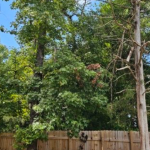
The most obvious sign, though often the latest, is the color of the canopy. The needles will transition from a healthy green to a pale yellow, then to a bright “pumpkin” orange or rust-red. Once the needles are red, the beetles have likely already matured and moved on to the next closest living pine.
The Pheromone “Mass Attack”
What makes Pine Beetles particularly dangerous in Harris County is their communication system. When a “scout” beetle finds a suitable, stressed tree, it releases an aggregation pheromone. This chemical signal tells every beetle in the vicinity that “dinner is served.” This leads to a “mass attack” where thousands of beetles descend on a single tree at once, overwhelming its ability to produce enough resin to defend itself.
Once that tree is colonized, the pheromone trail extends to the next closest tree. This creates “spots”, expanding circles of dead and dying pines that can jump across property lines and fencelines with ease.
Prevention Through Land Management
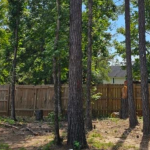
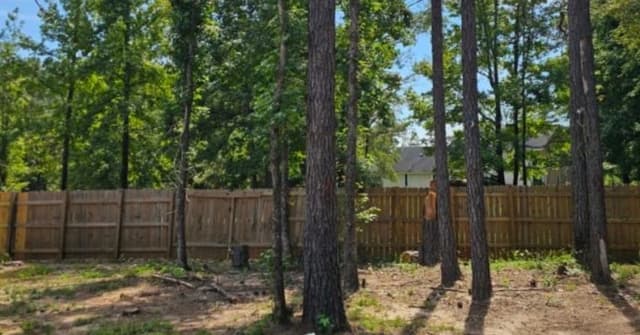
Chemical treatments for Pine Beetles are often expensive and only partially effective once an attack has begun. The best defense is cultural management. Beetles prefer overcrowded stands where trees are competing for limited water and nutrients. By utilizing professional land clearing and forestry mulching, property owners can “thin” their pine stands.
Thinning reduces competition, allowing the remaining trees to grow with thicker bark and produce more resin. Furthermore, removing invasive underbrush and “trash” species improves air circulation and reduces the heat stress on the pines’ root zones, making the entire property less attractive to beetle scouts.
Frequently Asked Questions
Can an infested pine tree be saved?
If the infestation is caught in the very early “pitch tube” stage, it might be saved, but usually, once the canopy changes color, the tree must be removed to protect nearby pines.
Does forestry mulching help with beetles?
Absolutely. By thinning overcrowded areas and removing brush, you reduce the stress on your pines, making them less likely to be targeted by beetles.
How do I dispose of beetle-infested wood?
It is vital to remove or mulch infested wood quickly. If left on-site, the beetles can emerge and attack healthy trees. Timber Wolf offers hauling and mulching solutions to handle this.
Do beetles attack hardwoods like Oaks?
No, Southern Pine Beetles and Ips beetles are host-specific to pine trees. However, other beetles, like the Boring Beetle, can attack stressed oaks.
Why is my pine tree dropping needles in the fall?
Pines do shed older interior needles annually (fall needle drop), which is normal. Beetle damage usually affects the entire branch or the whole canopy at once.
How quickly do beetles spread?
In the peak of a Texas summer, a beetle “spot” can expand by several trees every few days.
What is the “Blue Stain” in the wood?
It is a fungus carried by beetles. While it doesn’t rot the wood, it clogs the tree’s vascular system and can lower the value of the timber.
Is Timber Wolf Tree Service insured?
Yes, we are fully insured and licensed, ensuring that hazardous removals are handled with the highest safety standards in Harris County.
Summary Checklist: Pine Beetle Defense
| Condition | Risk Level | Recommended Action |
| Reddish “Popcorn” Pitch Tubes | High | Immediate inspection; tree is likely infested |
| Rust-Red Canopy | Critical | Remove tree immediately to prevent beetle spread |
| Overcrowded Pine Stand | Moderate | Schedule forestry mulching to thin the stand |
| Sawdust at Base of Tree | High | Check for entry holes; beetles are active |
| Drought-Stressed Pines | Moderate | Ensure deep watering and clear competing brush |
Final Advice
In Harris County, a Pine Beetle alert is a call to action, not a suggestion. Because of the pheromone-driven nature of these pests, an infestation on your property is a direct threat to your neighbor’s landscape and the surrounding community forest. The most effective way to handle a beetle “spot” is to create a “buffer” by removing the infested trees along with a small perimeter of healthy trees to break the pheromone trail. While it may feel counterintuitive to remove healthy trees, it is often the only way to stop the “slow-motion fire” of a beetle attack. For a reliable assessment and professional land management solutions, don’t wait for the needles to turn red. Contact the experts by visiting Timber Wolf Tree Service.
Reviewed by a Certified Arborist
This horticultural analysis has been reviewed to ensure all information regarding tree biology and storm safety meets industry standards.